

Recurring revenue is the ultimate dream for WooCommerce store owners. You sell something once, the customer stays subscribed, renewal orders come in automatically, and your business becomes a little more predictable every month.
However, subscriptions are one of the hardest things to get right in WooCommerce. I’ve seen store owners try to piece together custom code, free plugins, payment gateway hacks, or billing setups that eventually break the moment a renewal fails, a token expires, or a payment gateway changes something on their side.
And that’s the problem with subscription billing: once real money starts moving automatically, reliability matters more than features. Failed renewals, retry systems, payment tokens, gateway compatibility, upgrade paths, failed payment handling, customer emails, switching subscriptions, prorate… there’s a reason dedicated subscription plugins exist.
Over the years I’ve tested pretty much every major WooCommerce subscriptions solution—both on client projects and through Business Bloomer readers asking for help after things went sideways.
Some plugins are incredibly solid but expensive. Others look cheaper until you hit limitations. Some are developer-friendly. Some are merchant-friendly. Some work beautifully until you need support.
So instead of listing every subscriptions plugin on the market, this guide focuses on the three solutions I would realistically consider in 2026.
They all handle recurring payments. That’s the easy part. The real differences are reliability, payment gateway support, UX, maintenance, flexibility, support quality, and how much pain you’ll deal with six months after launch.
1. Official WooCommerce Subscriptions Plugin by WooCommerce ($279.00/year)
If you ask me which subscriptions plugin has the biggest long-term potential in the WooCommerce ecosystem, the answer is probably the official one: WooCommerce Subscriptions, built and mantained by the same company behind WooCommerce itself.
That means tighter integration with WooCommerce core, faster compatibility updates when checkout or payment APIs change, and better support for new platform features like Cart and Checkout Blocks. When you’re dealing with subscriptions, that matters a lot more than flashy marketing.
This is one of those plugins that sits at the center of your revenue operations. If recurring payments stop working, renewal orders fail, or a payment gateway breaks after an update, the consequences are immediate. That’s why I generally trust solutions that are deeply integrated with WooCommerce rather than plugins trying to extend it from the outside.
One thing people immediately notice is the relatively low review score. Honestly, I don’t think that tells the full story. Payment-related plugins almost always receive harsher reviews than regular WooCommerce extensions because merchants rely on them to literally get paid. A single failed renewal, gateway issue, or billing edge case can easily trigger a one-star review—even when the issue is temporary or fixable.
From a functionality perspective, WooCommerce Subscriptions is extremely mature. You get support for weekly, monthly, or annual billing cycles, free trials, sign-up fees, synchronized renewals, variable subscriptions, upgrade and downgrade paths, recurring coupons, automatic renewal notifications, retry systems for failed payments, and recurring revenue reporting.
One thing I particularly like is the amount of control both store owners and customers get. Admins can manually edit subscriptions, pause them, change recurring totals, modify trial dates, or manage renewals directly from the dashboard. Customers can manage payment methods, switch plans, upgrade or downgrade subscriptions, or cancel directly from the My Account page without opening support tickets every time. That self-service aspect becomes very important once your subscription business starts growing.
The plugin also integrates with a huge number of payment gateways for automatic recurring billing, which is probably the single most important factor in any subscriptions setup. Manual renewals are supported as well, but realistically, most stores want automated recurring payments if they’re serious about subscriptions.
Another major advantage is ecosystem compatibility. A lot of WooCommerce extensions, gateways, SaaS tools, and custom development workflows are built specifically around WooCommerce Subscriptions because it has effectively become the “standard” subscriptions layer in the WooCommerce ecosystem. That makes integrations and future customizations much easier compared to smaller alternatives.
The biggest downside is price. WooCommerce Subscriptions is expensive, especially once you combine it with premium payment gateways or additional WooCommerce extensions. And because subscriptions are mission-critical, most stores end up renewing support and updates every year anyway.
Still, if your business depends heavily on recurring revenue and you want the safest long-term choice from a compatibility and ecosystem perspective, the official plugin is very hard to ignore.

2. Sublium Subscriptions Plugin by Sublium (from $99.50/year)
If you know FunnelKit, you already know the team behind Sublium Subscriptions. Trusted by over 40,000 WooCommerce businesses, the folks at FunnelKit have been deep in the WooCommerce trenches for years, building checkout funnels, upsells, and automations.
So it makes sense that they eventually moved into subscriptions. Because subscriptions are not really just about billing—they’re about retention, failed payments, customer behavior, and lifetime value. And that’s exactly the angle they take here.
Sublium Subscriptions is positioned less as a “billing engine” and more as a complete subscription lifecycle tool. Instead of relying on multiple plugins for payments, dunning, cancellation flows, and reporting, everything is handled in one place.
There’s also a free version on WordPress.org, which is useful if you want to test things before paying. The paid plan starts at around $99.50 per year, and from there the feature set becomes quite practical very quickly.
It connects with all the major payment gateways you’d expect—Stripe, PayPal, Square, Apple Pay, and Google Pay—so automatic recurring payments are covered without much friction.
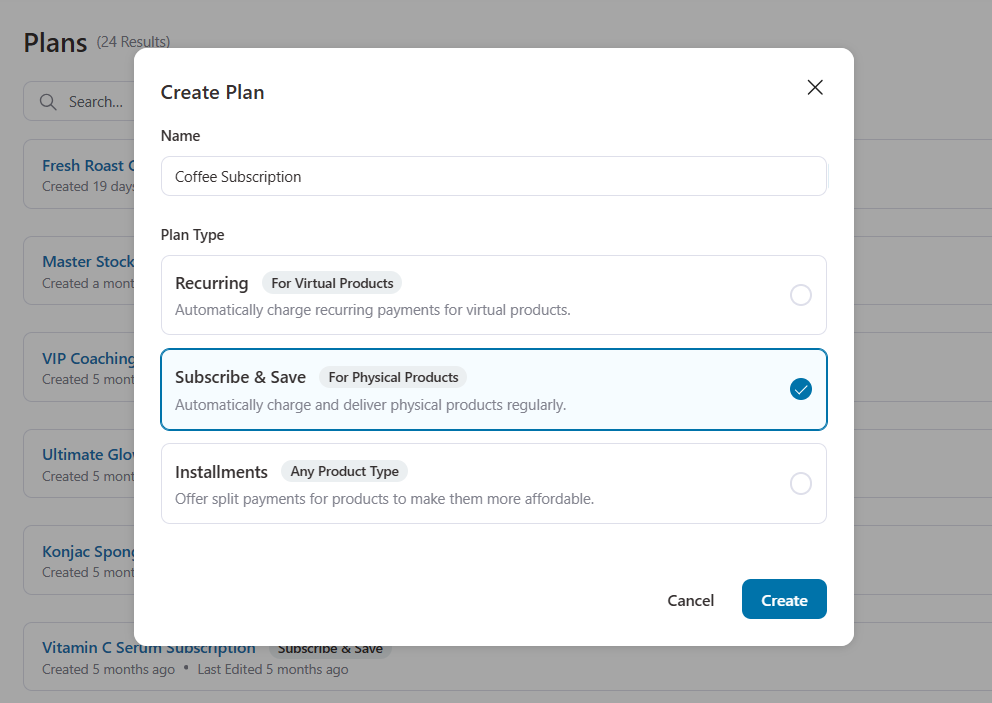
On the product side, it doesn’t force you into a rigid system. You can run standard recurring subscriptions, but also “subscribe & save” style setups or even installment-based payments, which is useful if you’re trying to serve different types of buyers without overcomplicating your catalog.
One detail I like is that you don’t need to rebuild your store around subscriptions. You just take existing simple, variable, or digital products and turn them into subscription products. That keeps things much closer to normal WooCommerce behavior, which is always a good sign in my view.
From a customer experience point of view, Sublium gives users a fairly complete self-service area. They can pause or skip payments, upgrade or downgrade their plan, resume subscriptions, or cancel them without needing to contact support. That might sound standard now, but the way it’s implemented matters a lot for reducing friction and support tickets.
Pricing flexibility is also well covered. You can add free trials, charge sign-up fees, or offer recurring discounts, which is basically what you’d expect from a mature subscriptions tool.
Where Sublium starts to differentiate itself more clearly is in what happens after the subscription starts.
Failed payments aren’t just logged—they trigger automated recovery flows with retries and card update links, which helps you actually recover revenue instead of losing it silently. Renewal, cancellation, and card expiry emails are all handled automatically as well, so you’re not left building that system yourself.
The cancellation flow is also more intentional than most plugins. Instead of just ending the subscription, it can prompt users with reminders or retention messages and optionally collect feedback before they leave. That’s a small detail, but it often makes a real difference in churn over time.
On the admin side, you get proper visibility into what’s going on: filters, activity logs, exports, and a dashboard that tracks things like MRR, ARR, churn, subscriber trends, and projected revenue. It’s not just data for the sake of it—it’s the kind of overview you actually end up checking regularly.
Finally, it integrates with a decent range of ecosystem tools like LearnDash, TutorLMS, MemberPress, AffiliateWP, WooCommerce Memberships, and WPML, which makes it easier to slot into an existing setup.
Overall, what stands out is the focus on retention. Most subscription plugins stop at “take recurring payments and manage them.” Sublium tries to stay involved after the first payment—especially when things start to go wrong or when a customer is about to cancel.
3. YITH WooCommerce Subscriptions Plugin by YITH ($199.99/year)
If the official WooCommerce Subscriptions plugin feels too expensive or too “enterprise” for your needs, then YITH WooCommerce Subscription is probably the strongest alternative on the market.
YITH has been around in the WooCommerce ecosystem forever, and that matters. One thing I’ve learned over the years is that subscription plugins are not the kind of extensions you want to buy from unknown developers. Recurring billing touches payments, renewals, customer accounts, failed transactions, emails, shipping schedules, and a lot of sensitive business logic. You need a company that is actively maintaining the product and supporting it long term. That’s where YITH has always been relatively solid.
The plugin covers pretty much all the core subscription functionality most WooCommerce stores need: recurring billing schedules, free trials, sign-up fees, synchronized renewals, upgrade and downgrade paths, subscription management from the customer account area, recurring coupons, failed payment handling, reporting, CSV exports, and integrations with several payment gateways. From a merchant perspective, it feels surprisingly feature-rich for the price.
In fact, there are areas where YITH actually goes beyond the official WooCommerce plugin—especially around subscription boxes and shipping workflows. Their “subscription box” functionality is genuinely interesting if you run a physical-product business where customers build recurring boxes or curated packages. That’s something I don’t see handled as elegantly in many competing solutions.
Another thing I like is the flexibility around customer management. You can allow users to pause subscriptions, switch plans, upgrade or downgrade, retry failed payments, or resubscribe after cancellation. On the admin side, you get decent control over renewals, payment timing, suspension rules, shipping synchronization, and manual subscription creation.
The plugin also includes reporting dashboards for recurring revenue metrics, which smaller store owners tend to appreciate because it gives them visibility into monthly recurring revenue without needing external SaaS analytics tools.
Now, compared to the official WooCommerce Subscriptions plugin, I would say the biggest difference is ecosystem depth.
WooCommerce Subscriptions has effectively become the “default” subscriptions layer inside the WooCommerce world, so many third-party developers build specifically for it first. YITH integrations exist—and there are many of them—but you may occasionally run into compatibility limitations depending on your stack, payment gateway, or custom setup.
That said, YITH does one thing very well: they build products for actual WooCommerce merchants, not just developers.
The interfaces are usually approachable, the feature set is practical, and they tend to think about real ecommerce use cases like subscription boxes, shipping schedules, memberships, and customer retention workflows rather than just recurring billing itself.
I also think their pricing sits in a more reasonable middle ground for many small-to-medium WooCommerce stores.
Would I personally pick it over WooCommerce Subscriptions for a large or highly customized subscription business? Probably not.
But for stores that want a mature subscriptions plugin with a strong feature set, a long-standing WooCommerce company behind it, and a slightly more merchant-focused approach, YITH is a very credible option.

Conclusion
All three plugins in this comparison do the same core job well: they let you run subscriptions in WooCommerce without reinventing the wheel. The differences are not really about “can they do subscriptions?” but about how they behave once your store starts growing.
WooCommerce Subscriptions is the safest bet in terms of ecosystem stability. It’s built by Woo, tightly integrated with WooCommerce itself, and tends to stay compatible with new core features and payment updates faster than anyone else. If you care about long-term reliability and the widest possible compatibility with extensions and payment gateways, this is still the reference point.
YITH WooCommerce Subscriptions sits in a slightly different place. It’s more merchant-focused, often more flexible in practical store scenarios like subscription boxes, shipping synchronization, and marketing-oriented features. It also plays well if you’re already inside the YITH ecosystem, where integrations between plugins are a big part of the value. In short, it’s a strong alternative if you want a feature-rich setup without necessarily going “all-in” on WooCommerce’s official stack.
Sublium Subscriptions, on the other hand, is the most “modern growth” interpretation of subscriptions in this list. It doesn’t just stop at billing—it pushes harder on retention, failed-payment recovery, cancellation prevention, and lifecycle management. It feels closer to a conversion and LTV optimization tool that happens to include subscriptions, rather than just a billing system.
So how do you choose?
If you want maximum compatibility and the safest long-term foundation, WooCommerce Subscriptions is still the default answer. If you want a solid all-rounder with strong merchant features and ecosystem flexibility, YITH is a very reasonable option. If your focus is growth, retention, and squeezing more lifetime value out of each subscriber, Sublium is the most opinionated, and arguably the most “marketing-driven”, of the three.
There isn’t really a wrong choice here. They’re all mature enough to run real subscription businesses.
At that point, it comes down to your stack, your priorities, and how much control vs convenience you want in your setup.



Hi Rodolfo,
I installed the enhancer for woo subscriptions plugin hoping that I would be able to give the option to clients to switch between simple subscription plans on their account page. Although it has a tick box for allowing to switch between subscription plans, it doesn’t work.
Do you know a plugin or any other solutions to achieve this?
By default it only works for variable subscriptions.
Thanks in advance.
Regards,
Steven
Not fully sure. What if you turn the product type from “simple subscription” to “variable subscription”?
Which membership plugin you use (if any) should also be a consideration when choosing a subscription plugin since there can be some overlap between the two. If you use Yith memberships, you will find better compatibility and more comprehensive support if you stay with Yith for subscriptions. Same with Woo memberships and subscriptions.
Great point
Please help. In Woo Commerce Subscritions we have a 24 week subscription (6 recurring payments) for a bundled product –online course and 4 boxes of shakes ( 2 flavor options; chocolate or vanilla). We want customer to be able to change their flavor preferences before the next recurring billing without making any other changes. Our problem is that when we allow customer to make changes to how 4 boxes are flavored ie from 4 chocolate 0 vanilla to 2 choc an2 vanilla, the system makes customer end up doing this thru checkout. Here is our problem–this checkout genertes a NEW Order which is then emailed to the drop shipper BEFORE the recurring payment takes place in essence triggering free product sent to customer AND the same NEW order sent to customer when credit card is charged at proper billing time. How do we enable customer to be able to change product mix in the subscription without triggering a checkout in woo commerce?
Hi John, I’d ask the plugin developers in this case
Just wanted to mention that there’s an add on plugin now that was officially added to the Woo marketplace called “all products for subscriptions” that allows existing products to be turned into subscriptions. I didn’t know the Yith plugin already allowed this though – probably would have gone that route if I’d known!
Thanks a mill!
Yes, but be aware that with this Addon (there is also a second one that does this feature) it is not possible to give free trials. (there is also a second addon on the Woo Marketplace Subscription Enhancer, that does this feature — transfer existign products in subsciptions –but it also lacks free trials)
Thank U !
Welcome!