

In a recent Business Bloomer Club Slack thread, members discussed the surprising simplicity of Björk’s official merch store.
Despite being a global music icon, her store runs on what looks like a very minimal WooCommerce setup — using the default Storefront theme with limited customization a minimal Shopify setup since August 2025.
This sparked a broader conversation around whether a simple tech stack can still deliver results when the brand is powerful enough. Let’s unpack what we can learn from this and what it means for WooCommerce developers and store owners.
Update – August 2025
Since this article was first published, Björk’s merch store has moved from WooCommerce to Shopify. While the platform choice has changed, the main point of this case study still stands: strong branding, a loyal audience, and a straightforward shopping experience can be more decisive than the underlying tech stack.
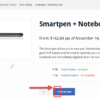
This is a screenshot from the July 29, 2025 Web Archive, when the site was still running on WooCommerce:

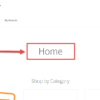
And this is the new Shopify website:

The Power of Branding Over Technical Complexity
One of the most striking aspects of Björk’s shop is how little it relies on bells and whistles. The layout is simple. The product display is clean. There’s nothing overly complex about navigation or UX.
Yet, it works—because the brand does the heavy lifting.
If Björk can sell merch on what could pass for a 101 setup, it shows just how much branding can outperform even the most technically polished website. Fans are not here for a slick experience; they’re here to buy something connected to an artist they love.
For store owners, this is a crucial insight: your investment in branding, community, and audience-building could matter more than chasing every trendy UX feature.
Minimal Customization, Maximum Impact
Some keen-eyed observers noted that the site used to run on the free Storefront theme, which ships with a clean and performance-friendly design. While that’s usually a starting point for WooCommerce beginners, in this case, it may very well be the final product.
That choice actually reinforces a smart strategy:
- Speed: Minimal bloat equals fast load times.
- Focus: No distractions from the core goal—buying merch.
- Maintenance: Easier to update, secure, and manage.
For WooCommerce developers, it’s a reminder that sometimes the best theme is the one that gets out of the way.
Sales Without the Fancy Plugins
It’s safe to assume the store doesn’t rely on dozens of commercial apps or heavily customized templates. It likely uses WooCommerce’s Shopify’s built-in tools.
What’s important here is the trust Björk’s fans already have. When people arrive at the site, they don’t second-guess. They click “Buy” because they know what they’re getting.
This type of pre-existing relationship can dramatically reduce the friction usually present in ecommerce. No need for urgency timers, exit-intent popups, or cart abandonment sequences. The brand does all of that before the customer ever lands on the page.
But Would This Work for a New Store?
Of course, this approach doesn’t mean every ecommerce site should look like Björk’s. If you’re launching a new store without an audience or reputation, UX, design, and performance matter even more.
- You may need visual storytelling to establish trust.
- Conversion optimization will help guide new visitors.
- SEO, email capture, and retargeting tools are essential.
In short: what works for a global music legend won’t automatically translate to a niche store with zero traffic. But the takeaway is that you don’t need to overbuild when your brand is already doing the hard work.
What WooCommerce Devs Can Learn From This
If you’re building WooCommerce sites for clients, this example is an opportunity to revisit assumptions. The loudest voice in the room often says: more features = better. But sometimes simplicity, speed, and branding win the day.
- Don’t underestimate what a simple theme/template can do.
- Focus more on messaging and clarity than animations.
- Ask your client what their audience really needs.
The best WooCommerce site isn’t the most customized—it’s the one that converts.
Conclusion
Björk’s merch store is a fascinating case study in branding over tech stack. A minimal site, powered by a basic theme and a loyal audience, is likely generating significant revenue with very little complexity.
For WooCommerce store owners and developers, the lesson is clear: focus on brand, speed, clarity, and trust. Sometimes, the simplest store is the smartest one.






The best article ever from a customization guru. That’s real wisdom. Thank you, mister.
Thank you Demir!