
If you ask a WooCommerce merchant about the WordPress admin today, you’ll likely get a frustrated reply.
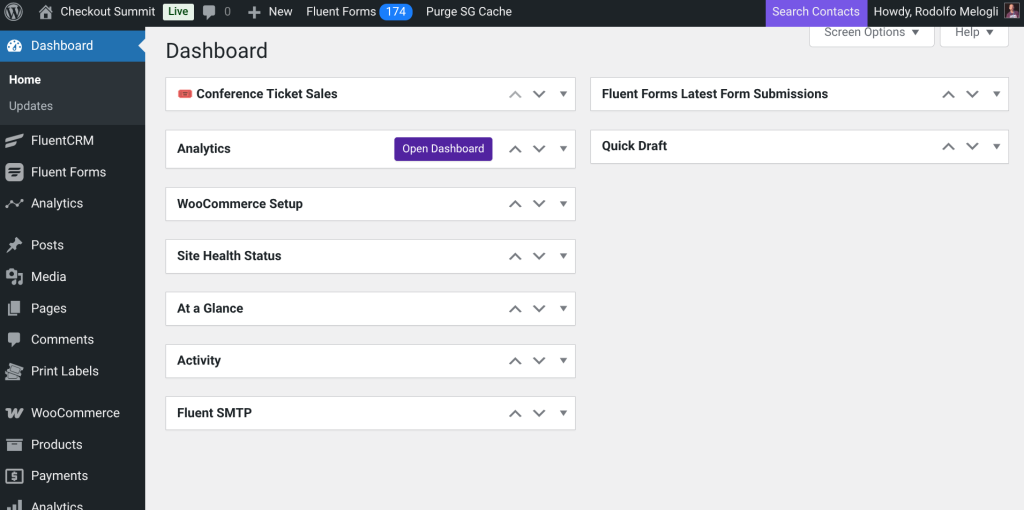
The WP backend has been around forever, and WooCommerce relies on it for everything: orders, products, payments, settings, taxonomies, reports. Once you add the various plugins and themes most stores require, that dashboard quickly becomes a messy screen. Hard to navigate, and hard to focus on what really matters: running the business.
Meanwhile, competitors are moving fast. Their dashboards are clean, intuitive, and actually enjoyable to use. Everything is logical, everything is quick.
And us? We still need to deal with bloated sidebars, random widgets (I usually hide them all to keep my wp-admin clean), and notifications that feel more like spam than helpful insights.
Does this admin fatigue drive store owners away? Well, that’s the big question.
But before we look for an answer, we have to admit we haven’t done enough to modernize the experience. If we don’t fix the backend soon, it’ll be a dealbreaker.
WP Admin: The Backbone We’re Taking for Granted
Last week I watched Dave Loodts talk about “WooCommerce in 2027: The New Admin Design”. He walked through the current dashboard UX/UI, highlighting exactly how difficult it is for store owners to maintain focus.
And he’s (absolutely!) right. When you look at the admin today—especially on a WooCommerce site—it’s a mess.
Because WooCommerce relies on the WordPress backend for core functions, it’s already crowded. But most stores don’t stop there; they layer on another 10, 20, or 30+ plugins, plus a theme that insists on adding its own custom menus.
Suddenly, the dashboard becomes a cluttered nightmare. It’s hard to find what you need, hard to focus, and honestly exhausting if you have a lot to do.
At the end of the day, most merchants only need daily access to a handful of screens: Orders and Products. That’s where the real work happens.
We’ve gotten used to the clutter, sure. But being used to a problem doesn’t mean the problem is solved. Merchants notice every wasted click, every buried submenu, and every irrelevant notification. It all adds up to a diminished experience.
Are We Losing Store Owners to “Easier” Dashboards?
Here’s the truth: merchants don’t care how flexible WooCommerce is if the dashboard is painful to use. They leave because managing their store shouldn’t feel like a chore.
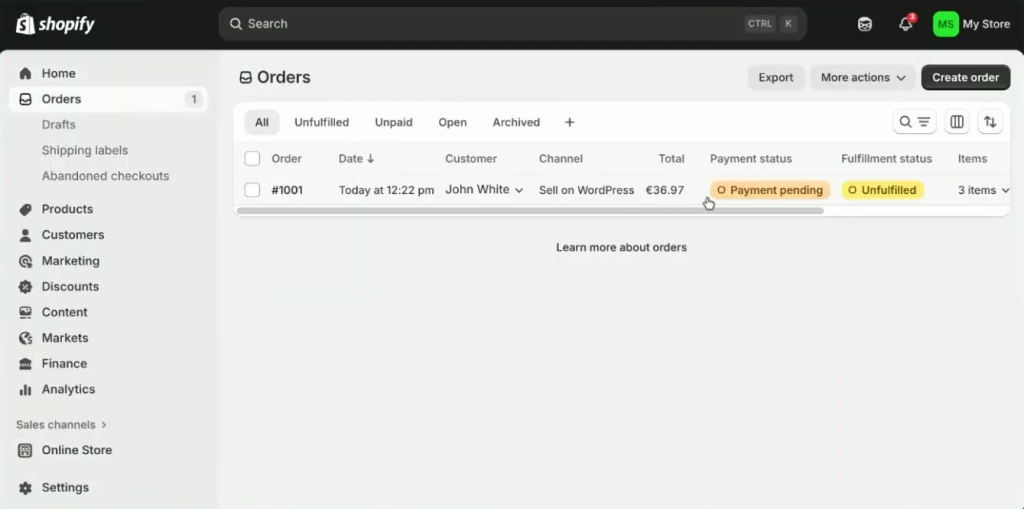
Other platforms are eating our lunch. Modern SaaS alternatives and lightweight builders offer dashboards that are clean, fast, and intuitive. Their metrics are clear, their actions are logical, and honestly they just look better.
Merchants love these platforms because they get out of the way and let them work.
Meanwhile, WooCommerce users are still stuck in a world of cluttered sidebars, irrelevant widgets, and “spammy” notifications. And yes, the admin experience is probably why some users are quietly moving to other platforms.
I’ve seen it firsthand. Merchants get lost in the menus, don’t know where to find important functions, and end up wasting time that should go into growing their business. They know WooCommerce can do almost anything, but the problem is the friction of the interface.
“We’ve Done Fine for 15 Years, Why Fix It?”
Of course, there’s another side. WooCommerce has been around for 15 years. And for many merchants, it just works. The backend isn’t perfect, but it’s familiar. And let’s be honest: if you’ve been using WordPress for a few years, you’ve learned to live with it.
Some argue that changing it could be risky. People are used to it, and a big redesign could confuse existing users (WordPress 7.0 alienated some existing users because of a color change…). Plus, plugins and themes depend on the current structure, so there’s always fear of breaking something.
And then there’s AI. Some people think that the WP admin as we know it today might soon be replaced anyway. Instead of menus, submenus, pages, and widgets, you could just chat with your backend, ask it to show sales, manage orders, or adjust prices.
Is that future possible? Absolutely.
But is it here yet? Not even close.
Until that day arrives, we still need a functional, modern admin that doesn’t feel like a relic of the past.
The AI Factor: Chatting Your Way Through the Backend
AI is arriving fast. Merchants could use it right inside WordPress to get things done without hunting through menus. Imagine a backend where you type: “Show me last week’s orders over $50”, and it appears instantly. Or “Update all sale prices by 10%” without touching a single page.
That’s a compelling vision, and it may become reality sooner than we think.
But right now, AI is not a replacement for a broken dashboard. You still need structure. You still need clear workflows. And in the current state of WooCommerce, those elements are sorely missing.
Thinking “AI will fix it” is just delaying the inevitable: if we don’t modernize the WP admin right now, we will continue to lose merchants to platforms that already prioritize speed, clarity, and ease of use.
Until AI is truly seamless, merchants still need to click through pages, menus, and filters. And the current admin makes that slow, frustrating, and sometimes difficult.
It’s Time to Prioritize the WooCommerce Admin
At the end of the day, the WP admin is too important to ignore. Notifications still pop up everywhere. Widgets we don’t use are still there. The sidebar is still overwhelming, with a gazillion menu items and submenus.
Merchants notice. They are quietly frustrated, and many are probably thinking of moving away.
We can’t wait for AI or a future redesign. We need a better admin experience now: cleaner, faster, and simpler.
The dashboard should make sense the very first time a user logs in—not after they’ve spent hours hunting for basic information. Merchants shouldn’t have to hide widgets just to find a usable workspace, install plugins just to silence notifications, or write custom code just to reorganize a bloated sidebar.
If merchants can’t focus, they will go somewhere else. And that’s not a theory.
Other platforms are already leaner and more intuitive. If WooCommerce doesn’t prioritize the admin, we risk losing a generation of users who will never look back.
It’s time to stop treating the backend like something secondary. The admin is the heart of the store. And right now, it’s beating far too slowly.







I read the title and it was like a lightbulb flipped on..
YES! You are right! I’ve had it gnawing at the back of my head for some time but the statement that “admin fatigue is driving people away” shone the light on that dark thought.
I immediately want to fix it myself ofc, that’s how I’m wired.. But I know that realistically I can’t. I can try to fix as much as possible with our own plugins, our clients admin experience and even modify to some extent third party plugins (WooCommerce included).
I can kind of picture the mindset of the Woo team about this.. “WP core will first iterate over the WP admin now, so why make an effort until that is done?”
Which is a fair point but I think it will take too long. We can’t afford to wait 2-3-4 years more for that to manifest in a tangible way.. dataViews was introduced in 2023 and it took until now to _maybe_ get it into core tables (I say maybe because a bunch of posts claim its coming but when I test a barebone 7.0 RC1 it’s not there…)!
I hope we see a disruptive design change in WP admin even if it ruffles some feathers, because it is way overdue and just painting the admin in a different color in WP 7.0 is not gonna cut it to stay competitive.. WooCommerce installed or not.
Yep, great points!