
The WooCommerce checkout block has been around since November 2023, yet most merchants are still sticking with the classic shortcode checkout.
So what’s going on?
After talking with clients, developers, and people across the ecosystem, I keep seeing the same pattern: curiosity mixed with hesitation. Not because the block is bad—but because switching checkout systems is a big deal, and nobody wants to mess with something that already works.
In this post, I’m sharing my honest take on the WooCommerce checkout block usage—what it actually is, how it differs from the legacy checkout, and why adoption hasn’t moved as fast as some expected.
If you’ve been wondering whether it’s worth paying attention to, the answer is yes. But maybe not for the reasons you think.
A Brief History of the WooCommerce Checkout Page
For years, WooCommerce stores have relied on the classic shortcode—a simple way to display a checkout form on a WordPress page:
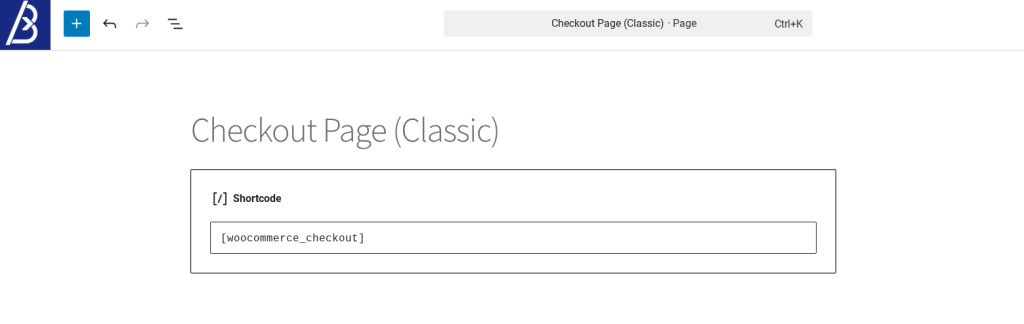
It’s familiar to developers, flexible through hooks and filters, and has powered millions of transactions:
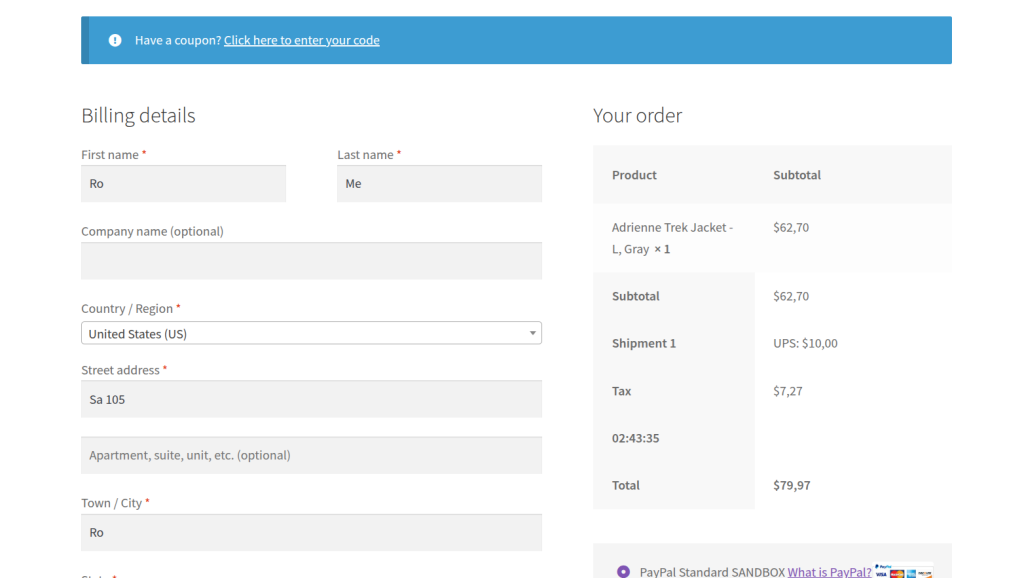
But as WordPress evolved, so did the need for a more modern WooCommerce checkout design.
That’s exactly why the WooCommerce checkout block exists. It started inside the WooCommerce Blocks plugin, went through multiple iterations, and was built to feel native inside the block editor instead of bolted on like the legacy checkout.
The big milestone came in November 2023, when the checkout block was officially integrated into WooCommerce core and set as the default for new stores.
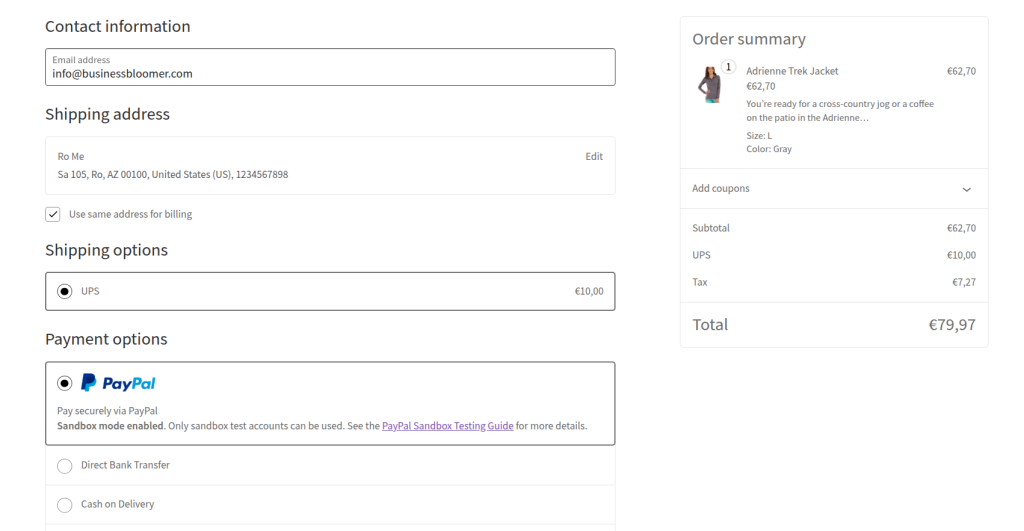
Understanding this history helps make sense of the two systems: the classic checkout is tried-and-true, while the checkout block represents WooCommerce’s vision for a more dynamic and compatible experience.
Why the Checkout Block Exists
The WooCommerce checkout block wasn’t created just for the sake of change—it was meant to address real needs. As WordPress embraced the block editor, WooCommerce needed a checkout that could integrate seamlessly with block-based themes (FSE), take advantage of native blocks, and offer a more consistent experience across themes.
It was also built with non-developers in mind. Instead of dealing with shortcodes or template overrides, store owners can drop a checkout block onto a page, move the children blocks around, and move on. It’s meant to work with WordPress, not against it—and to keep working as the platform evolves.
It also opened doors for better performance and improved conversion possibilities. WooCommerce’s own research indicates that block-based checkouts can lead to higher completion rates, thanks to their modern layout:
We do see a 27% increase in checkout conversions when using the block checkout vs classic
James Kemp, WooCommerce Product manager
In short, the checkout block exists to modernize the WooCommerce checkout experience—bringing flexibility, future-readiness, and a smoother path for both developers and store owners.
Adoption Numbers
Even with its clear benefits, the checkout block hasn’t taken over despite it comes by default on new WordPress websites when WooCommerce is installed.
October 2024
I first asked a question on Twitter back in October 2024, so approximately one year after release, and received good feedback back then:
If you’re not on Twitter, most people were still sticking with the old shortcode-based checkout at that time. They explained they were waiting for the block version to feel more stable, with fewer bugs and better support from other plugins.
Several mentioned that the plugin ecosystem hadn’t caught up yet—many extensions still didn’t work properly with the blocks, so whenever someone tried switching on a real site, they’d hit a problem with one integration and switch right back to the shortcode.
A smaller group had already made the move. Some said they’d been running the cart and checkout blocks on their sites for a while without major trouble, and a couple mentioned building all their newest stores directly on blocks. They generally felt the blocks gave a nicer user experience overall and were worth it once more plugins added support.
Plugin makers chimed in too—one had added block compatibility to their helper tool months earlier but saw very low uptake so far. Another said customer demand for block support was growing, so their team was actively working on it, though it was a big task.
In short, back then the vibe was mostly cautious and practical: people liked the idea of blocks and recognized the improvements, but production sites weren’t rushing in because of compatibility risks. It felt like a gradual shift that would pick up as things matured.
February 2026
It was right about time I’d ask the same question again. This time I went with a Twitter poll:
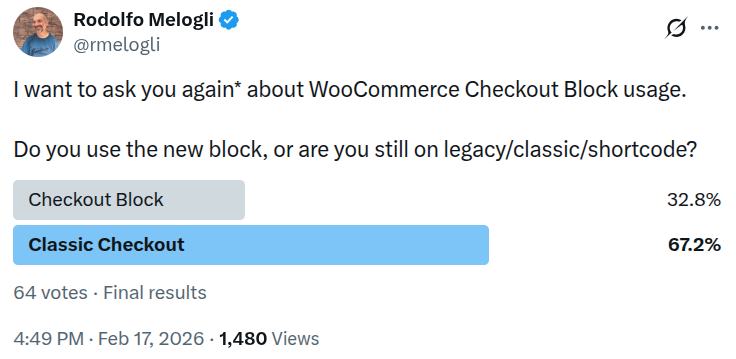
The post received modest engagement overall. This was far from a representative or statistically meaningful survey of the entire WooCommerce ecosystem—that said, the limited responses do point to a consistent pattern seen in similar past discussions: adoption of the checkout block remains slow and uneven.
Several people expressed ongoing reluctance due to compatibility gaps with third-party plugins/extensions. Common pain points include missing support for custom fields, live previews (e.g., product option thumbnails), or other specialized checkout features that work fine in the classic version but break or aren’t possible yet in blocks.
When custom requirements or specific plugins are involved, people often end up reverting back to the legacy checkout to meet client needs reliably.
A few positive notes exist around it fixing certain bugs (especially payment gateway rendering) or being viable for basic sites with no heavy customization.
Overall, the sentiment reinforces what was observed in 2024: the block-based checkout offers modern advantages (better extensibility via Gutenberg, some bug fixes), but plugin ecosystem lag, customization limitations (especially around PHP hooks), and fear of breakage keep many developers/agencies on the classic version for real-world WooCommerce stores in 2026.
Maarten Belmans from Studio Wombat was generous enough to run an internal test among his 10,000 WooCommerce customers:
The analysis shows 87% still use Classic checkout layouts versus 13% Block layouts, with 5% having migrated to Shopify.
Adoption rises to 18% for sites detected since November 2023, when the checkout block became the default, indicating gradual uptake among newer implementations.
Following this discussion, WooCommerce shared their own data as well (merchants can opt-in to share usage data):
James Kemp (WooCommerce Product Manager) replied directly to Maarten’s post, basically confirming that their internal usage data matches the findings Maarten scraped from ~10,000 sites.
He pins the main blocker is plugin compatibility issues (forcing people to stick with classic), highlights the strong conversion lift from blocks, and expresses optimism that better extensibility will drive more uptake going forward.
Extensibility and Developer Perspective
One of the biggest conversations around the checkout block has been about extensibility. When it first launched, WooCommerce intentionally avoided replicating all the classic hooks and filters. The idea was to provide “curated extensibility”—a controlled set of ways to extend the checkout without overwhelming developers or breaking future updates.
For some, this approach felt restrictive. Developers accustomed to the full freedom of the classic checkout had to rethink how they customized the experience. Integrations that relied on traditional hooks often required workarounds or were simply not possible at first.
Over time, though, things have started to shift. WooCommerce is exploring more open approaches, like the Interactivity API, which promises new extensibility points.
Meanwhile, developers are gradually embracing block-based patterns, benefiting from native block tools, consistent development workflows, and the ability to build checkouts that are easier to maintain long-term.
My Honest Take
Here’s my honest take on why the WooCommerce Checkout Block hasn’t taken over yet.
1. Classic Editor
First of all, timing matters. WordPress as a whole is still catching up with Gutenberg adoption. The Classic Editor plugin alone still has more than 9 million active installs.
That tells you everything you need to know: change in this ecosystem happens slowly, especially when it affects core workflows.
2. Custom Checkout Plugins and Themes
Then there’s the reality that WooCommerce isn’t operating in a vacuum. Over the years, companies like Checkout WC, FunnelKit, and similar tools have positioned themselves as checkout specialists. Many merchants already use them, already like them, and already see no reason to switch. When a solution works, people stick with it.
Themes play a role too. Plenty of them ship with their own checkout experiences or customization. And merchants tend to follow one simple rule: if it’s not broken, don’t touch it.
Agencies and developers often feel the same way, especially because the legacy checkout has always been incredibly flexible. Actions, filters, template overrides—you could bend it however you wanted. Moving away from that means learning new patterns and sometimes rethinking years of established workflows.
3. Curated Extensibility
There’s also history. Early versions of the block weren’t fully extensible, and WooCommerce intentionally avoided one-to-one parity with classic hooks.
That “curated extensibility” philosophy made sense from a product standpoint, but it also made some developers cautious. First impressions matter, and those early limitations shaped perception.
Also, as Ian Misner from Kestrel says, it’s not really possible to “catch up” when it comes to full third party plugin compatibility, because the checkout block isn’t meant to be extended in the same way as the legacy checkout. As Ian explained, its architecture is intentionally different—extensibility isn’t missing by accident, it’s limited by design. That perspective highlights a concern some developers have had when trying to make their plugins work seamlessly with the newer system.
4. Legacy
What I see now is this: the checkout block isn’t struggling with new stores. New installs come with Gutenberg, block themes, and modern defaults baked in. For them, the block checkout is just the normal checkout. The real gap is with existing sites—and that gap is mostly about familiarity, not capability.
As the broader WordPress ecosystem continues moving toward blocks, I expect adoption to rise naturally. Not because anyone is forced to switch, but because eventually the modern approach becomes the obvious one.
Looking Ahead
The WooCommerce checkout block isn’t going away—it’s a key part of WooCommerce’s vision for a modern, flexible checkout experience.
Adoption may be gradual, but the future looks promising. As more stores embrace Gutenberg, FSE themes, and native blocks, the block checkout will naturally become a standard part of new workflows.
On the developer side, upcoming initiatives like the iAPI could open up new extensibility points, making it easier to customize and integrate without losing the benefits of the block system. Over time, this may bridge the gap between flexibility and the curated approach WooCommerce originally set out to provide.
For store owners and developers, the takeaway is simple: there’s no rush to abandon legacy checkouts, but keeping an eye on block-based solutions—and experimenting on new installs—will pay off as the ecosystem matures. The checkout block is less a replacement and more a step toward a future-ready WooCommerce.






Just tried to use blocks to improve over the classic checkout in terms of accessibility ( some nice work has been done there ).
Spent 2 hours trying to navigate their broken and piecemeal documentation to add a simple customisation. It’s a mess with many areas are labelled experimental, lots of docs not labelled for context ( block or shortcode ) and no end to end examples – just little independent snippets that rely on the prior knowledge. Experimental is not a word I want to implement on critical pages.
Will move back to classic and implement the improvements I need in less time, then continue migrating stores to shopify.
I feel your pain… the checkout block was originally built to be “stable” and hence they removed most of the original flexibility. It seems, however, that they are reverting that decision and making it more customizable. We’ll see
I disagree on multiple aspects:
It’s not about familiarity; it’s about capability.
All the new stores that we deploy are built on classic checkout because our clients’ specific requirements are not met by the block checkout.
For anything that requires complex checkouts (especially shops with high order volumes), classic is the only way to go.
With “client requirements” you mean customization/integrations? If that’s the case, well, I totally agree
TL;DR:
1- Blocks are still clunky.
2- My non-tech customer are more comfortable with the Classic editor.
3- Most plugins and hooks works best (only?) with the Classic checkout.
Who said “new” meant “better” ?
Indeed! Good TLDR