WooCommerce: Programmatically Rename Variable Product Attribute Options

I think the easiest way to explain this customization is with a case study. Go to this variable product page, that I use to sell sponsorship packages on the WooWeekly newsletter: https://www.businessbloomer.com/shop/newsletters/wooweekly-sponsorship/

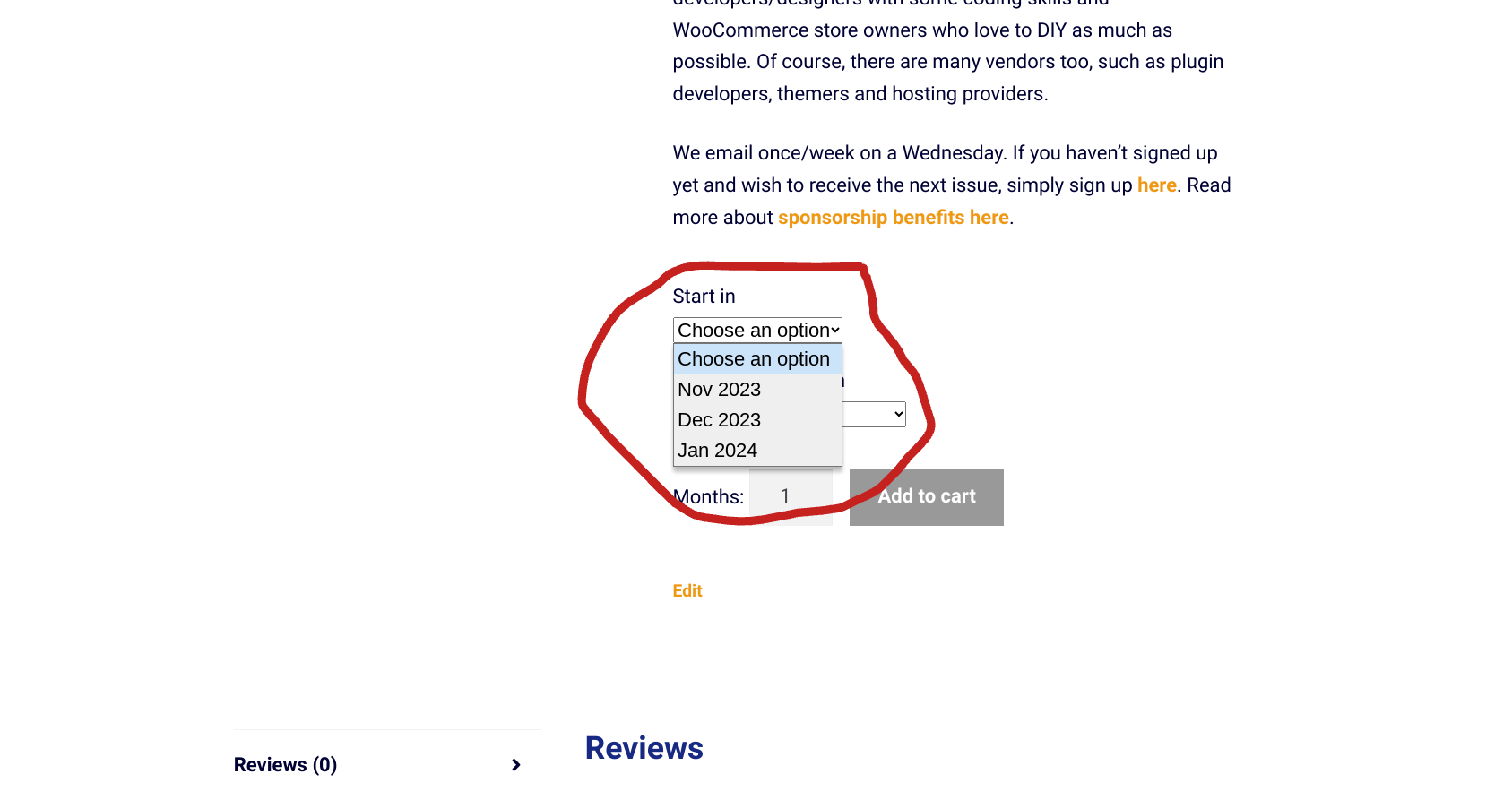
Now, take a look at the “Start in” attribute dropdown. That’s where a company picks the month for when the sponsorship starts. You will notice that this always displays the next 3 months based on today’s date!

And that’s exactly what I’ve done with the code below. Instead of manually changing the attribute names to “Nov 2023”, “Dec 2023”, “Jan 2024” in October 2023, then changing them again in November, and so on – I’ve come up with a way to rename attribute options dynamically, so that I don’t need to do this every month.

Which means, enjoy, and hope you can make the most of this snippet in case you need it too!

Continue reading WooCommerce: Programmatically Rename Variable Product Attribute Options

WooCommerce: A/B Testing, Statistical Significance Formula, Case Studies

If you’ve never run an A/B Test (“Split Test“) on your WooCommerce website, this article is for you. Also, if you want to discover how I run my tests without third party software on this same website, feel free to read on.

So, why A/B Testing a WooCommerce website?

Because your design, development and business decisions should be based on data-driven hypotheses and experimental validation as opposed to “everyone-is-doing-this-thing-so-I-should-do-it-too” theories.

In this article, I’d like to introduce you to the concept of split-testing, go through some statistics formulas, describe my first ever A/B test here on Business Bloomer, and finally share the PHP snippets I use for running quick A/B tests on this same WordPress / WooCommerce website, so that you can learn a thing or two about this very important topic.

Enjoy!

Continue reading WooCommerce: A/B Testing, Statistical Significance Formula, Case Studies

WooCommerce: The Importance of Personalization in Corporate Gifting

For businesses to thrive in the modern marketplace, fostering meaningful relationships is crucial. One strategy that stands out decidedly among others within the corporate communication domain is personalization, especially when it relates to gifting.

Corporate gifting with a personalized touch speaks volume about how deeply you value your associations. It’s not just about remembering their names or roles, and in fact it goes beyond that. Knowing their preferences and choosing gifts accordingly make each recipient feel genuinely valued and thereby strengthens bonds even further.

This level of meticulous attention demonstrates thoughtful professionalism, leaving a long-lasting impression on recipients’ minds.

So an endeavor as simple as personalized corporate gifting done effectively has the potential to positively impact both professional relationships and your business identity as well. Let’s look at how WooCommerce store owners can cater to this market successfully.

Continue reading WooCommerce: The Importance of Personalization in Corporate Gifting

WooCommerce: Getting Started As An Expert – A Complete Guide

If you’re looking to start your own ecommerce store, no platform does it better than WooCommerce.

WooCommerce is your path to online selling success. It’s a flexible, open-source e-commerce plugin specifically built for WordPress websites. 

From setting up and customizing your shop, to mastering orders and sales tracking, this complete guide will walk you through becoming an accomplished WooCommerce expert.

Read on for all the info you need to get the ball rolling!

Continue reading WooCommerce: Getting Started As An Expert – A Complete Guide

WooCommerce: Switch User Role If Customer Spent More Than $

Many businesses allow their customers to unlock benefits and discounts once a certain spend amount is reached.

Think about a “VIP club“, where members can get an exclusive 20% discount once they reach $1,000 worth of store purchases.

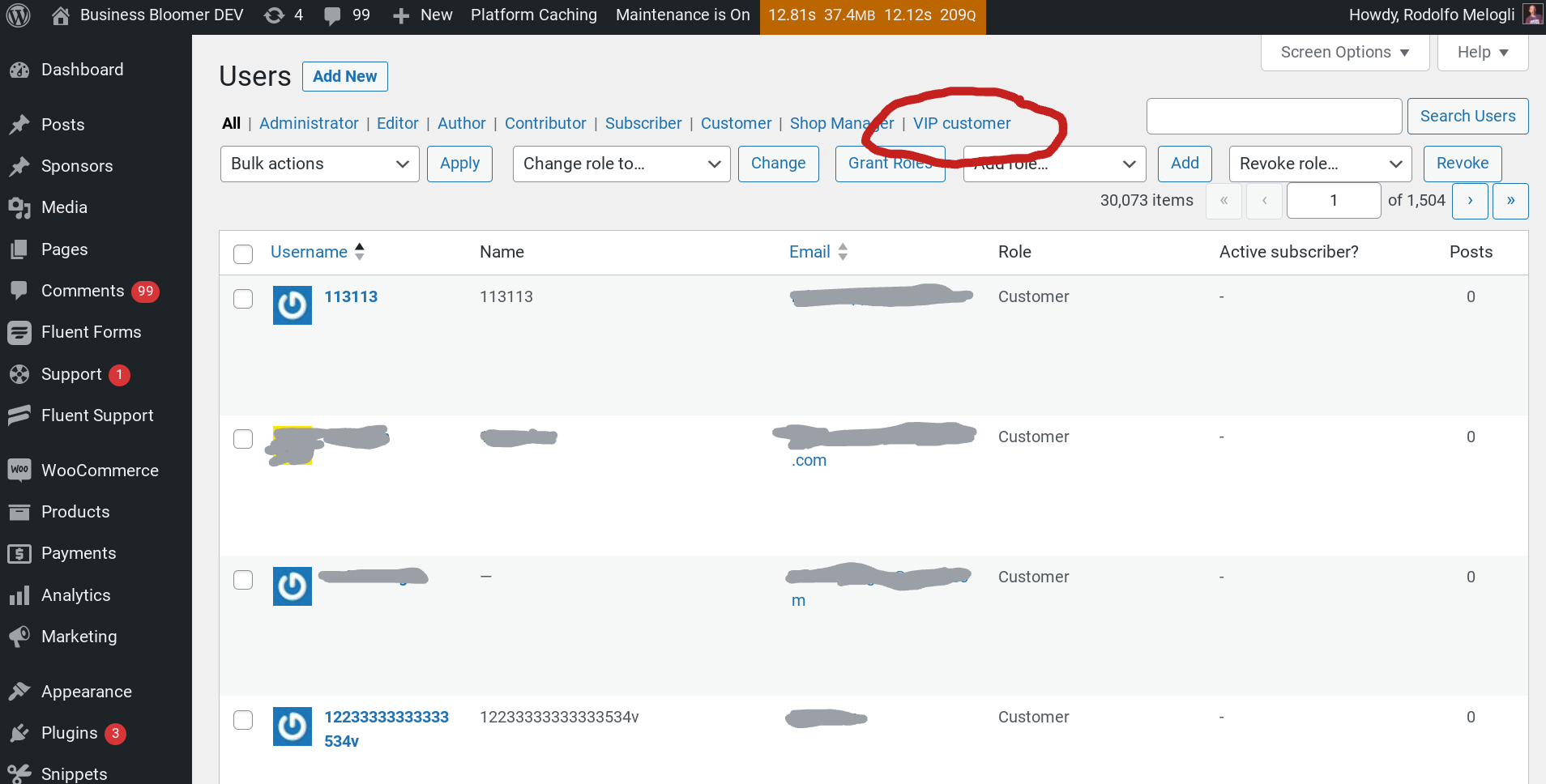
Let’s also say that, when the threshold is reached, you want to promote users from the “customer” role to a custom “VIP customer” role, so that it’s easier to segment your email marketing and overall targeting.

Well, the snippet below will allow you to switch user role once a certain spend is reached. The function will trigger when a customer places an order, so that we can calculate the total spent, and possibly switch their role. Enjoy!

Continue reading WooCommerce: Switch User Role If Customer Spent More Than $

WooCommerce: Filter By Featured @ Products Admin

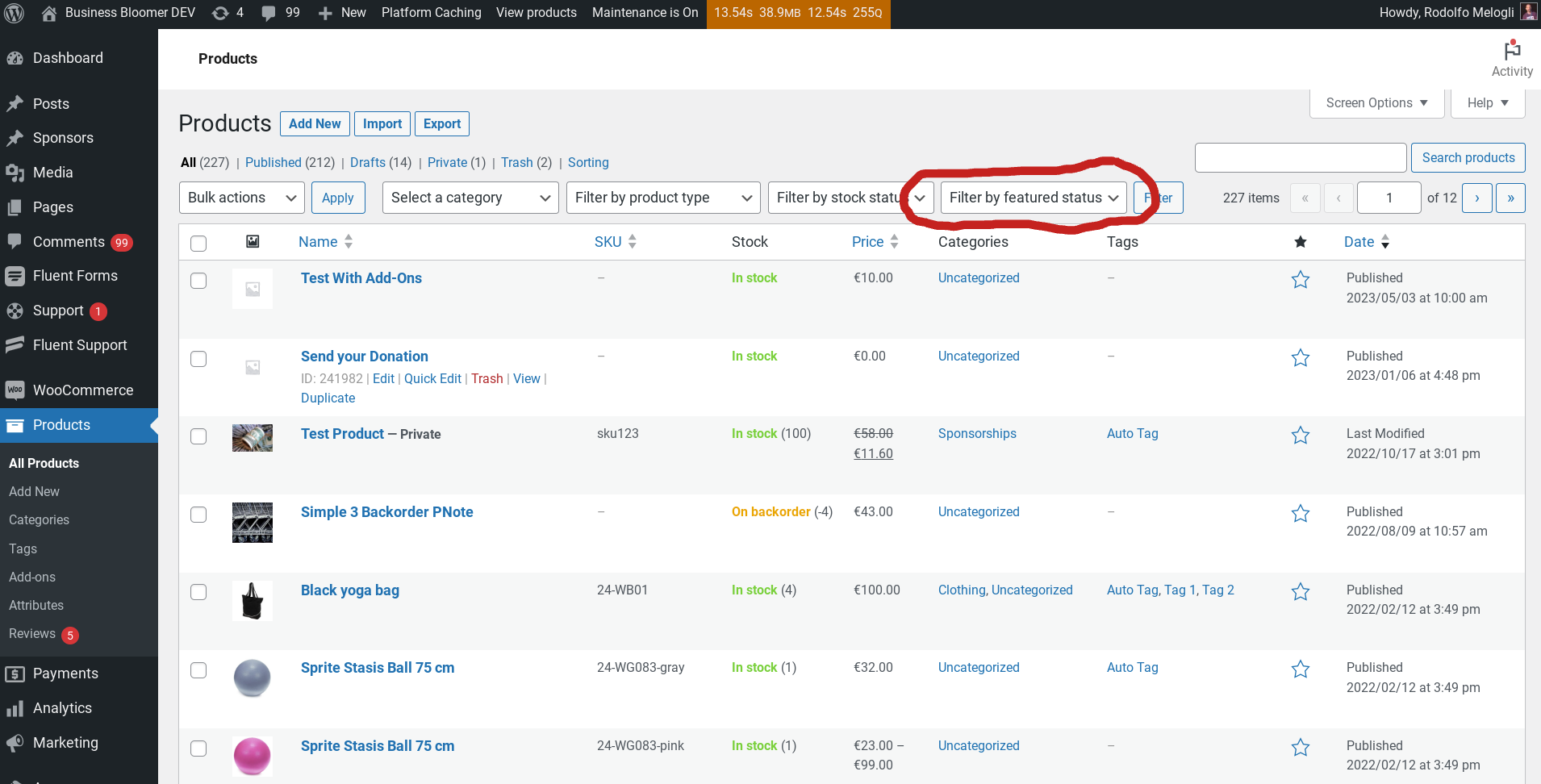
Unfortunately, if you still use the “star icon” to feature your WooCommerce products in the admin dashboard, there is no way to “sort by featured” or “filter by featured” in the Products table. If you’ve featured many products, it’s basically impossible to see them all at once, unless you scroll through many pages of products.

Today, we will study how to add a new filter beside the existing ones (“Select a category“, “Filter by product type“, “Filter by stock status“) so that you are able to see all your WooCommerce featured products or – in alternative – all products that are not featured.

In the snippet below, we first add a new select dropdown with the two options, and then we modify the query so that it can listen to the custom GET parameter, and return all featured products or all non-featured products. Enjoy!

Continue reading WooCommerce: Filter By Featured @ Products Admin

WooCommerce: Split Revenue On Specific Products

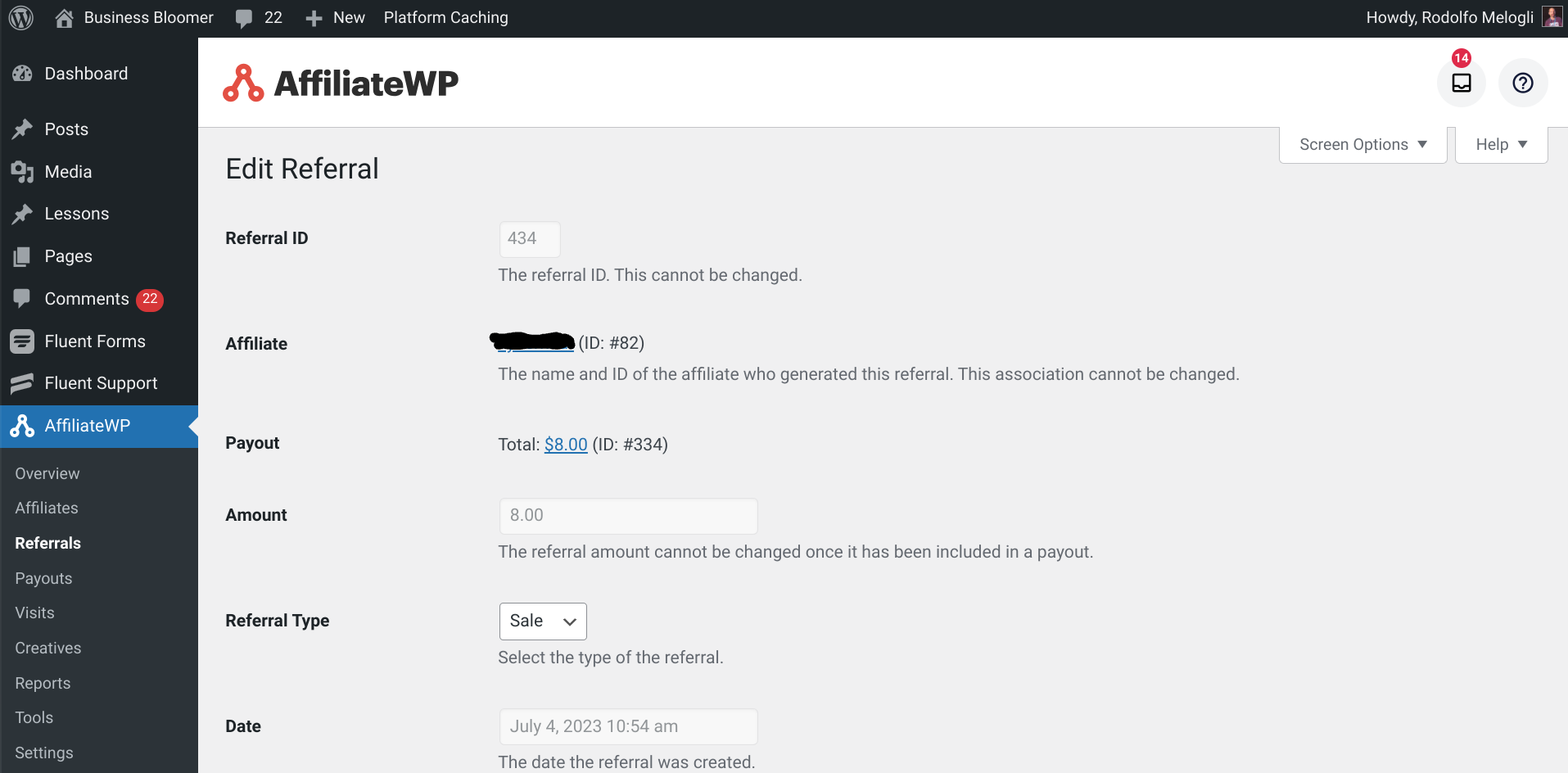
Well, this is one of those “steal my setup” tutorials – because I’m going to share the system I use to generate commission/split revenue records when specific products (which are the result of business partnerships) are purchased on the Business Bloomer WooCommerce website.

Let me explain. Imagine an online course that comes with an owner (Mary) and a teacher (John). Mary and John have a 50/50 split revenue agreement: whenever the online course is purchased, Mary must notify John of such a purchase, and log a 50% commission/referral in the system. John will then have access to the dashboard where there are stats, total amount due, and can then request a payment/withdrawal at the end of the month.

Another example, which is the one that also applies to my WooCommerce Mini-Plugins business. In this case, there is Business Bloomer (Rodolfo, the owner), and a plugin developer (XYZ, the coder). If our agreement is to split revenue equally, Rodolfo must log the earnings that XYZ generated for each WooCommerce sale, so that XYZ can manually request a payment based on the due amount.

So, to recap, when a WooCommerce product is purchased, how do we generate a record of the “partner” earnings somewhere, so that they can access and check their total?

Continue reading WooCommerce: Split Revenue On Specific Products

WooCommerce: Customize Product Search Form HTML

The “Search products…” WooCommerce form usually appears in the website header and/or the Shop page sidebar based on your theme settings and widget setup.

It usually features an input form with a magnifying glass icon (unless your theme customizes it via CSS), without a visible search button, and on enter it redirects users to the search result page.

Case study: most WooCommerce Ajax Search plugins target the WooCommerce product search form input, so that when you start typing, the “instant search results” window pops up. However, I needed to disable this behavior on certain subsites/languages and the only workaround here was to add a class to the search form input, so that I could target it in my Ajax plugin selector exclusions.

Even if the above scenario is very unlikely, the challenge is still valid. So, how do we customize the HTML of the “Search products…” WooCommerce form (so, not the CSS, but the actual HTML output)? Let’s go!

Continue reading WooCommerce: Customize Product Search Form HTML

WooCommerce: 7 Different Ways to Run a Survey

Understanding your audience’s needs and preferences is a key component of any successful WooCommerce business.

Surveys are perfect tools for this, providing valuable insights that can improve your product, enhance customer service, and ultimately create a more effective eCommerce operation overall.

But what approach should you take to run these surveys? 

From traditional methods to modern tactics, there are numerous ways you can reach out to your customers for their opinions, but we’ll be focusing on online forms.

In this guide, we’ll explore these different methods individually to help you choose the best fit for your business needs.

Continue reading WooCommerce: 7 Different Ways to Run a Survey

WooCommerce: “Bulk Edit” > Remove Categories @ Admin Products List

Go to WordPress Dashboard > Products, select more than one product, and then go to the Bulk Actions dropdown and choose “Edit“.

You’re now presented with a simple yet effective bulk edit window, where you can do basic product fields editing such as changing the price in bulk, assign the same tag in bulk, set a sale price percentage in bulk, and so on. You can even assign one or more categories to the selected products.

But wait – it seems you cannot remove product categories from all selected products, which is a bummer! Well, I’m not sure if this is a WooCommerce choice, but honestly it’s such a basic thing that I’m surprised there is no bulk edit option for that.

So, let’s fix this. Let’s add a custom select dropdown with a list of product categories – whenever a category is selected, this will be removed from all checked products. Enjoy!

Continue reading WooCommerce: “Bulk Edit” > Remove Categories @ Admin Products List

WooCommerce: Show Rating @ WooCommerce Product Review Admin Email

When a WooCommerce customer posts a product review on the single product page, and “Comment must be manually approved” is enabled under WordPress dashboard > Settings > Discussion, the store owner gets an email notification so that they can approve / trash / spam such a review.

What you probably knew, is that the “WooCommerce product review” is – actually – a “WordPress post comment“, which means the email that the admin gets is the default “Please moderate: _____” notification that is also generated when a comment is submitted on a blog post.

Which… is really bad! And that’s because the email does not contain any sort of information regarding the WooCommerce product review, and especially the rating (“2 stars out of 5”). As a store owner, I definitely want to know whether the comment I’m about to moderate is (1) a product review and if (2) I need to reply to unfair feedback, so, let’s change that.

Here’s how to display the review rating in the “Please moderate: ____” admin email notification, when the comment is – of course – a WooCommerce product review. Enjoy!

Continue reading WooCommerce: Show Rating @ WooCommerce Product Review Admin Email

WooCommerce: Get “Trending” Products

There is a way to display the WooCommerce bestsellers via shortcode / block, but there is no way to calculate the bestsellers – say – from the last 7 days i.e. a list of “trending” products over the last N days.

The function below gives you a way to loop through the latest orders and fill an array with the top 10 products – you can then pass this list of IDs to a shortcode to display them wherever you wish. Enjoy!

Continue reading WooCommerce: Get “Trending” Products

WooCommerce: Order Number Prefix / Suffix

As you know WooCommerce uses the “order ID” (which is also the ID of the order post in the database) as the order number. This displays in the “WooCommerce” > “Orders” table, on each line of the order, under the “Order ” column, as well as the order “quick view” window, the single order page and the customer’s My Account page.

But what if you need to add a prefix or a suffix to this number, so that this is in line with your business or invoice requirements?

Here’s the fix – enjoy!

Continue reading WooCommerce: Order Number Prefix / Suffix

Where to find the WooCommerce order source?

In Shopify, there’s an option to view the source of each order, specifically showing the last external link clicked before the purchase. This is useful for tracking where customers are coming from and measuring marketing performance.

So how can one see order attribution in WooCommerce based on the Last Click criteria? WooCommerce doesn’t provide this feature natively ***, but it does offer flexibility through plugins and custom scripts.

Is there a way to bring this information into WooCommerce Analytics or to generate a report like this in WooCommerce? There are certainly options to explore, but finding the right approach depends on your specific needs and setup.

Continue reading Where to find the WooCommerce order source?