There are so many reasons why WooCommerce continues to power millions of stores around the world. It’s flexible. It’s open source. It’s customizable. But none of those explain its success on their own.
What truly makes WooCommerce thrive is… us. The community behind it.
For almost 15 years, developers, freelancers, agencies, makers, and merchants have shaped WooCommerce in public. They’ve shared code, answered questions, written tutorials, organized events, built extensions, and helped strangers solve problems at midnight on a Sunday on a random forum thread. That effort has done more than improve the software—it has moved it forward.
In this post, I want to reflect on why WooCommerce continues to stand out in a crowded ecommerce landscape, why community is still its strongest advantage, and why that human layer it’s the real deal (also including a live case study!).
What Makes WooCommerce Stand Out According to Its Users
When we talk about WooCommerce, we tend to talk about features. The flexibility. The open-source code. The ability to customize a store to almost any specification. The fact you “own your data“. The gazillion plugins and themes that are available for free or for a small subscription.
Its appeal seems entirely technical—we know the hooks, APIs, blocks, and integrations inside out. These are the things that we feature on our websites, blog posts, videos, newsletters.
And yet, something feels missing when you look only at these “features”. On their own, they don’t explain why WooCommerce has been so successful, while other platforms came and went. They don’t explain why a small snippet shared on a blog can ripple through thousands of stores, or why someone halfway across the world would spend hours troubleshooting a problem for a stranger.
The reality is that while features draw people in, they don’t keep them. They don’t create loyalty. They don’t build a movement. WooCommerce technical strengths are a starting point—but they are not the real secret.
The Real Reason WooCommerce Stands Out
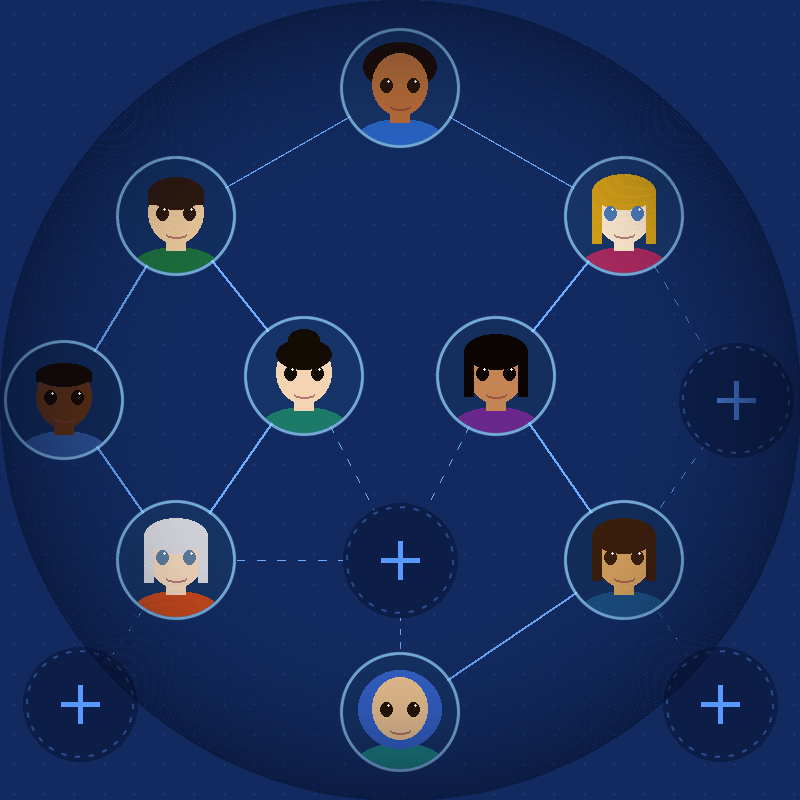
The real unique selling point of WooCommerce is the community that drives it.
Developers, store owners, freelancers, agencies, educators, bloggers, youtubers—they all contribute in ways that go far beyond writing code. They answer questions. They craft tutorials. They share case studies. They build in public.
This human layer is what makes WooCommerce more than software.
Without the community, WooCommerce would just be another plugin. The features would be there, but the advice, support, and shared experience wouldn’t. The community is what helps merchants turn features into real results. It’s what holds everything together.
Community also shapes the product itself. Contributions to GitHub, social media posts, and the countless pieces of shared content are proof that the software evolves because people care. It’s built not just for users, but by users, in a continuous loop of participation, feedback, and collaboration.
In short, the strength of WooCommerce is not just code—it’s the network of people who live, breathe, and improve it every day.
The Woo Community in Action
Volunteers have organized meetups in cities across the world, giving their time simply because they believe in connection and collaboration.
Online conferences like WooSesh make knowledge accessible to everyone, while in-person events like WooConf, WordCamps, and the recently launched Checkout Summit bring human interaction back to the ecosystem.
Then there are office hours, Slack conversations, forums, YouTube tutorials, and blog posts. These are small acts, often invisible, but they add up to an infrastructure of learning and support that no commercial platform can replicate.
Developers share plugins and snippets. Store owners mentor new merchants. Agencies contribute ideas that improve both the product and their clients’ revenue.
These contributions are often voluntary, unpaid, and often done in the evenings or on weekends. Yet they are what allow WooCommerce to scale. They prove that a product isn’t just a piece of software—it’s a living ecosystem built by people for people.
The Slowdown and Why We Missed It
The last few years have changed everything. Covid closed in-person events, paused meetups, and turned spontaneous hallway conversations into boring online calls. Post-covid fatigue saw some contributors step back, while others reassessed priorities. The natural, human rhythm of the community took a hit.
AI arrived as the next disruption. Tools that can generate code, content, or answers in seconds accelerated productivity but risked making interactions transactional. The joy of collaboration, the moments where someone tries to explain a tricky snippet, felt less visible.
The “human spark” of WooCommerce seemed quieter, almost fragile.
For a while, it was easy to wonder if the magic that made Woo thrive was fading. The ecosystem was still alive, but the pulse had slowed. The connections were harder to sustain.
And yet, the dedication, the passion, and the belief in something bigger than any one store or plugin never disappeared. It was simply waiting for the right moment to return.
The Comeback of Community
That moment is now. Events are returning. Conversations are picking up. People are reconnecting in online and in-person spaces. Meetups are trying to fill up rooms again. Slack channels are active. Conferences are once again creating spaces where ideas form, new friendships are made, and partnerships are agreed.
This resurgence reminds us that community is resilient. It can pause, even slow down, but it will come back when people prioritize connection. What was quiet is now waking up. The spark is returning, stronger than before because we’ve seen its absence.
It is a moment of reflection and opportunity. Community doesn’t sustain itself automatically—it thrives when people show up, when they invest a little of their time, energy, or resources. It is in those small acts that the ecosystem regains its rhythm.
Why Sponsors Often Don’t See the Value
I’ve been working hard (just over 8 months so far) to explain to potential sponsors the benefits of attending and contributing to Checkout Summit. With about 50 days left, I’ve only managed to sign agreements with 3 of them (plus a side event sponsor). And I only have six booths!
From what I’ve seen, many commercial sponsors have stopped investing in community initiatives. They now focus on metrics, conversions, and ROI (Return On Investment)—which wasn’t the case until last year.
The reality is that they fail to understand that the thing driving WooCommerce forward is not a feature or a page view—it’s people.
You can’t buy the human side of WooCommerce with a spreadsheet or a marketing budget. It exists because people show up, share their knowledge, mentor others, and give back. Sponsors often miss this because it happens slowly and quietly, but it’s the foundation of what makes WooCommerce special.
A Live Case Study: How the Community Makes Things Happen
I’ve been working hard for over 8 months, and I’ll keep going until Checkout Summit kicks off on April 23.
Organizing this international conference on my own has been really hard—but I can honestly say I haven’t burned out yet! There’s a million things to handle: speakers, sponsors, attendees, the venue, swag, printing, volunteers, media, a working website, marketing, sales, outreach, design, development… you name it.
On top of all that, the expenses are huge. I counted on sponsors to help cover them, but many didn’t come through. So I decided to run a live experiment—to show the world that it’s the WooCommerce community that really makes this conference, and WooCommerce itself, special.
The Founding Contributor program for Checkout Summit is living proof of how powerful and generous the WooCommerce community can be. Instead of waiting for a large sponsor or a corporate backer, this initiative relies on dozens of individual contributions—some as small as €10/$13—to fund the first edition of the conference.
You can check the page here:
This isn’t just a crowdfunding experiment. It’s a demonstration of how the ecosystem functions when people take responsibility for what they value. Every contribution is a vote of confidence in the community itself.
Together, these small acts add up, covering costs, creating opportunities for learning, and establishing a space where builders can connect in person once again.
Conclusion
If WooCommerce has been part of your journey—whether as a merchant, developer, educator, or fan—this is one way to give back. Even if you cannot attend Checkout Summit, participating as a Founding Contributor helps create a real, human space where the community can reconnect, collaborate, and innovate.
Together, we prove that WooCommerce is more than software. It is a movement powered by people. And together, we can keep it thriving for years to come.