WooCommerce: Why Use A Product Configurator Instead of Variations

One of the biggest marketing trends in recent years is the increasing shift towards delivering customized and personalized product experiences to customers. 

Customers are increasingly looking for online stores that provide order customization options for gifting purposes and the ability to add their personal and unique touch to their orders. While 90% of the U.S. customers find the idea of personalization appealing, impersonal shopping experiences frustrate 71% of customers

As a WooCommerce store owner it’s important to strive and meet the increasing consumer demands to prevent dissatisfaction, improve their shopping experiences and increase the overall sales.  

This article will see some easy yet impactful ways to deliver a personalized customer experience and order customization. But first, let’s see how it can benefit your WooCommerce store. 

Continue reading WooCommerce: Why Use A Product Configurator Instead of Variations

WooCommerce: Enable Advanced Coupon Features

While as a WooCommerce store owner, you keep looking for ways to increase your store’s sales and revenue – the same way, your customers also consistently look for opportunities to save money when purchasing online.  

And in this situation, offering coupons and discounts acts as a win-win for your business and customers. 

Statistics suggest that 51% of U.S. buyers search for coupons online before making an online purchase, and over 80% of millennials use coupon codes when shopping online. 

Every online shopper loves a good deal. You can tap into this consumer behavior to attract buyers and increase sales through coupons on your WooCommerce store. 

So, in this article, we see the top WooCommerce coupon plugins you can use. But first, let’s learn more about the benefits of offering coupons to your customers. 

Continue reading WooCommerce: Enable Advanced Coupon Features

WooCommerce: Check If Product Is A Subscription

We’ve already found out how to check if a WooCommerce product is simple, variable, grouped… Today we add more conditional tags as we study which WooCommerce “product types” are included within the official WooCommerce Subscriptions extension.

There are two new product types in such case: “Simple Subscription” and “Variable Subscription”, with the difference being you can offer multiple billing periods within the same product page (choice between daily, monthly and yearly for example) with the latter.

So, how do we know if a given product ID is a subscription, and also whether it’s a simple or variable one? Here’s the quick solution – enjoy!

Continue reading WooCommerce: Check If Product Is A Subscription

WooCommerce: Retain Field Values @ Checkout Reload

Go to WooCommerce Checkout as a logged out user. Fill out billing name, surname, address, email and phone. Change your mind and go back to Cart. Return to Checkout. Billing name, surname, email and phone (basically everything but the address) are gone!

But hey, this annoying WooCommerce flaw is about to go away with a few lines of code. Either reload the Checkout page or go back to it later – your info will still be there (as long as you haven’t cleared your cache/cookies and the WooCommerce session hasn’t expired of course).

Enhoy!

Continue reading WooCommerce: Retain Field Values @ Checkout Reload

WooCommerce: Top Product Filter Plugins For Your Store

As your WooCommerce store grows – so do its product variants. On average, a WooCommerce store owns hundreds of inventory items and product variants for sale. 

While your goal might be to offer maximum product options to your visitors, with such a wide range of product variations – it can get challenging for your customers to find the exact product they’re looking for. 

This is where product filters come into play. Statista suggests that 61% of buyers consider the ease of finding products the most important aspect of an online shopping experience.  

No one has time to browse through the long product listings as it’s easier for customers to switch to another store that facilitates product discovery. Thus, product filter options enable your customers to browse through products of their preferences – positively impacting the user experience and increasing the chances of sales. 

This article shares the top product filter solutions for your WooCommerce store. But first, let’s learn more about their benefits and how this simple option can affect your store’s bottom line. 

Continue reading WooCommerce: Top Product Filter Plugins For Your Store

WooCommerce: How to Enable Apple Pay and Google Pay

Not offering different payment options for your customers on your WooCommerce store is a call for a high cart abandonment rate and lost sales and customers. 

Your store’s payment gateway has a direct impact on the customers’ buying decisions. Don’t take our word for it – statistics suggest missing payment methods is the reason for 7% of cart abandonments in eCommerce stores. 

As a result, the more payment options you offer to your customers – the more sales you can win for your store. 

Besides PayPal and credit cards – digital and UPI mobile payment options like Apple Pay and Google Pay are amongst the most popular and widely adopted payment methods by customers. Statistics anticipate that from 2021 to 2025 – the number of mobile proximity payment users in the United States to grow from 100 million to a whopping 125 million.

Thus, as customers become increasingly reliant on mobile payment solutions like Apple Pay and Google Pay – it’s important to integrate these payment options in your WooCommerce store to ensure high customer satisfaction.

So, in this article, we share the top ways to configure Google Pay and Apple Pay in WooCommerce. But first, let’s learn more about the benefits of this configuration for your store. 

Continue reading WooCommerce: How to Enable Apple Pay and Google Pay

WooCommerce: Replace Variable Price With Active Variation Price

Surprisingly enough, variable products with a price range display two prices: at the top right you find the “parent” product price, displayed as a range; but once you select a variation, a second price appear just above the variation add to cart. Somewhat confusing.

In today’s solution, we’ll see once and for all how to replace the top right variable product price with the one of the current variation, while also hiding the variation price. Therefore, you’ll see a single price on the single product page for variable products. Enjoy!

Continue reading WooCommerce: Replace Variable Price With Active Variation Price

WooCommerce: A Guide to Selling LearnDash Courses

It’s no secret that selling online courses is a lucrative business. According to Forbes, the online course industry’s revenue in 2018 alone reached a staggering $46 billion dollars.

So, how can you take advantage of this growing market? 

With the wide range of easy-to-use learning management systems and e-commerce solutions available, it is easy for any educator or knowledgeable expert to start monetizing content.

Using WordPress as a starting point, LearnDash and WooCommerce make a powerful duo for running an e-learning business.

In this guide, we’ll take a brief look at how you can use LearnDash to sell online courses and walk you through the steps you need to follow to set up LearnDash with WooCommerce.

Continue reading WooCommerce: A Guide to Selling LearnDash Courses

WooCommerce: How To Set Up Complex Shipping Rules

WooCommerce inbuilt shipping settings are quite simple – too simple, sometimes.

WooCommerce merchant often require a complex shipping setup, depending on the industry or the (very expensive) courier fees.

But shipping is much more: conditional logic, marketing, user experience.

Setting shipping costs with a handy “table rate” plugin, combining them with cart-based marketing actions and guiding your customers through the buying process can help you sell more and reduce your return rate. 

Explaining to your customers why they can’t buy a certain product, or encouraging them to add another one to the cart to get a discount, or blocking certain shipping rates so that your courier doesn’t overcharge you… there are so many needs for a more advanced shipping setup.

In this article, we’ll tale a look at the importance of shipping costs, why conditional logic is a game changer and why customers love to get free shipping. Enjoy!

Continue reading WooCommerce: How To Set Up Complex Shipping Rules

WooCommerce: How to Add Custom Fields to Variations

When selling products on your WooCommerce store – you want to provide as much product information as possible to your customers. This is especially because, unlike a physical shop or a brick and mortar store – your online customers cannot physically touch or experience the products before buying them. 

Hence, providing additional information and keeping customers informed about the multiple facets of your products is essential. And an effective way to enhance customer experience is by adding custom fields for product variations. 

Product variations are product attributes – including the product’s size, color, pattern, texture, and style. On the other hand, WooCommerce custom fields allow you to add additional data for individual products – to display on a single product page. 

Custom field variations let you add data unique to an individual product – which can include anything from the product’s ISBN, additional product specifications, radio buttons, and checkboxes. Thus, custom fields for product variations could either mean: 

  • Fields to display additional product variation’s information, or 
  • Fields to accept customer input to customize the product variation through dropdowns or radio buttons. 

So, in this article, we share simple yet efficient ways to add custom fields to product variations. But, first – let’s see how adding fields for product variations help your WooCommerce store. 

Continue reading WooCommerce: How to Add Custom Fields to Variations

WooCommerce: How To Enable “Buy Now Pay Later”

Several eCommerce businesses are increasingly adopting flexible payment solutions – understanding customer needs and demands. Because in today’s digital world of Apple Pay and UPI solutions – a rigid approach toward payment solutions costs businesses a huge deal of sales, customers, and lost revenue.  

48% of customers prefer online stores that accept multiple payment methods. In addition, Sezzle’s report suggests that the product’s over-cost is the primary reason behind 55% of abandoned carts. Hence, a flexible payment solution can help reduce cart abandonment and improve your store’s sales in these situations. 

And one such highly flexible and customer-friendly payment solution that allows your customers on a tight budget to buy the products they want is – Buy Now, Pay Later (BNPL). 

BNPL is a perfect payment solution that seamlessly integrates with WooCommerce and doesn’t require customers to pass a credit check or pay interest.  

So, in this article, we share the top BNPL solutions to integrate with your WooCommerce store. A growing number of BNPL options, including some of those appearing in this list, can easily be configured through PeachPay, a one-stop-shop checkout & payment solution for WooCommerce stores.

But before we get ahead of ourselves, let’s learn more about this type of payment option and its benefits for your store’s sales and overall growth. 

Continue reading WooCommerce: How To Enable “Buy Now Pay Later”

WooCommerce: User Can Only Purchase A Product Once

In the era of online courses, subscriptions, custom-made products and product personalization, it may happen that you need to limit a specific WooCommerce product sales. For example – users may only purchase a trial product once in their lifetime.

In this short tutorial, we will see how this is done. Clearly, the user must be logged in in order for the code to trigger, so this applies to stores that require checkout login before proceeding with the order.

Enjoy!

Continue reading WooCommerce: User Can Only Purchase A Product Once

WordPress: The Biggest Web Agency Summit

Atarim is set to launch its biggest annual event in the WordPress space for web agencies and freelancers. Its third annual Web Agency Summit kicks off from April 26th to April 29th, 2022, aimed at helping businesses grow substantially in 2022.

Freelancing is consistently growing worldwide – as individuals realize the flexibility and benefits that lay beyond a successful freelance career. Currently, at 58 million and counting – Upwork Press Release suggests freelancing to become the majority workforce in the U.S. by 2027. This number signifies the growing awareness and adoption of freelancing as a preferable career choice amongst individuals.  

However, running a freelance business and web agency isn’t as easy and requires heavy legwork despite its benefits and profitable returns. 

So, whether you’re a thriving freelancer or struggling to keep up with your agency – the Atarim Web Agency Summit is the perfect opportunity to invest your time in and learn about the uncertainties of running your own business, how best to deal with them, manage stress, and grow your agency to the next level. And this year, Business Bloomer is proud to be one of their media partners to support the Atarim summit in the WordPress space. 

So, if you’re curious about scaling your freelance business or digital web agency, or even about how to start one – here’s all you need to know about the biggest Web Agency Summit and what to expect from it this year.

Continue reading WordPress: The Biggest Web Agency Summit

WooCommerce: Remove “Clear” Button @ Variable Product Page

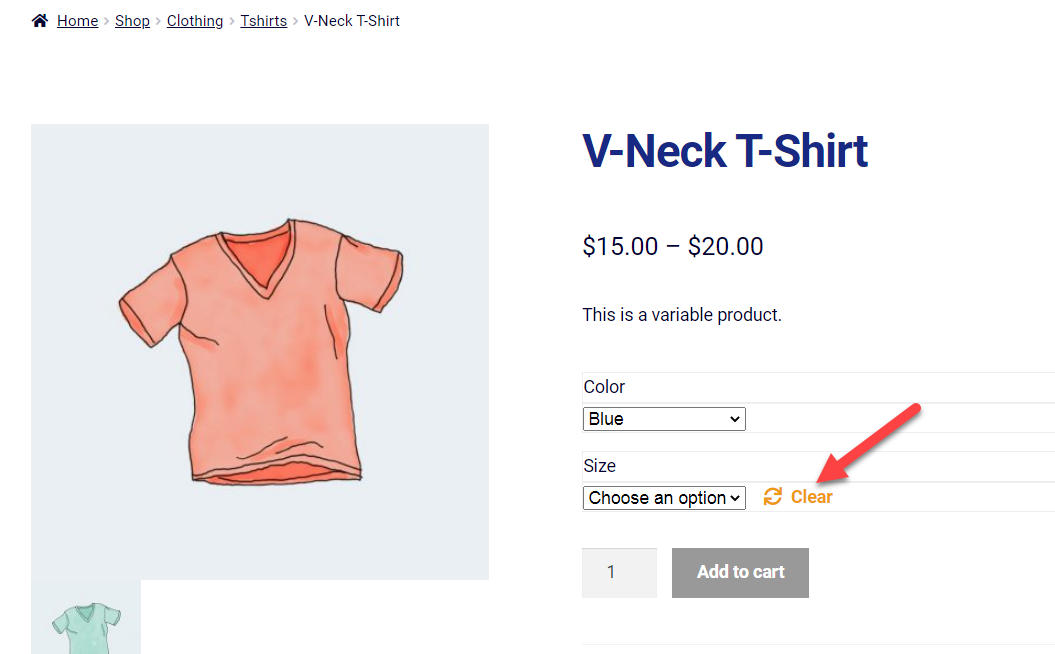
As soon as you select a product attribute (by default, this is a dropdown right above the variation add to cart button), a “Clear” button appears beside the dropdown/s in order to reset the selection/s and start anew.

As usual, some WooCommerce store owners may require to hide/delete such link, and this is why your truly is here: why “display:none” stuff with CSS when you’re not actually removing it completely from the code? Which means, there must be a PHP way.

And, once again, here comes a 1-line snippet. Enjoy!

Continue reading WooCommerce: Remove “Clear” Button @ Variable Product Page